
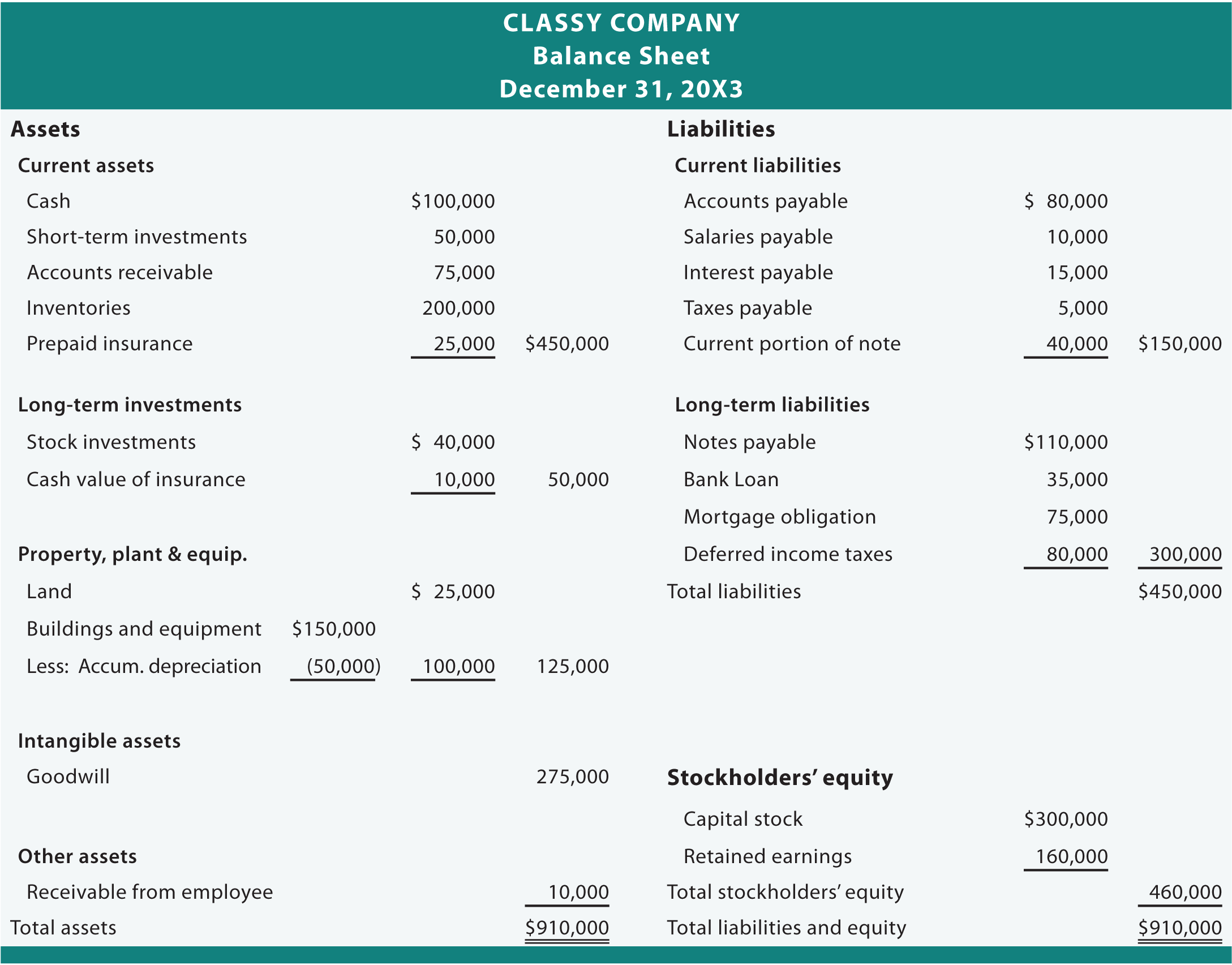
If the company takes $10,000 from its investors, its assets and stockholders’ equity will also increase by that amount. While stakeholders and investors may use a balance sheet to predict future performance, past performance does not guarantee future results. Let’s look at each of the balance sheet accounts and how they are reported. Different accounting systems and ways of dealing with depreciation and inventories will also change the figures posted to a balance sheet.
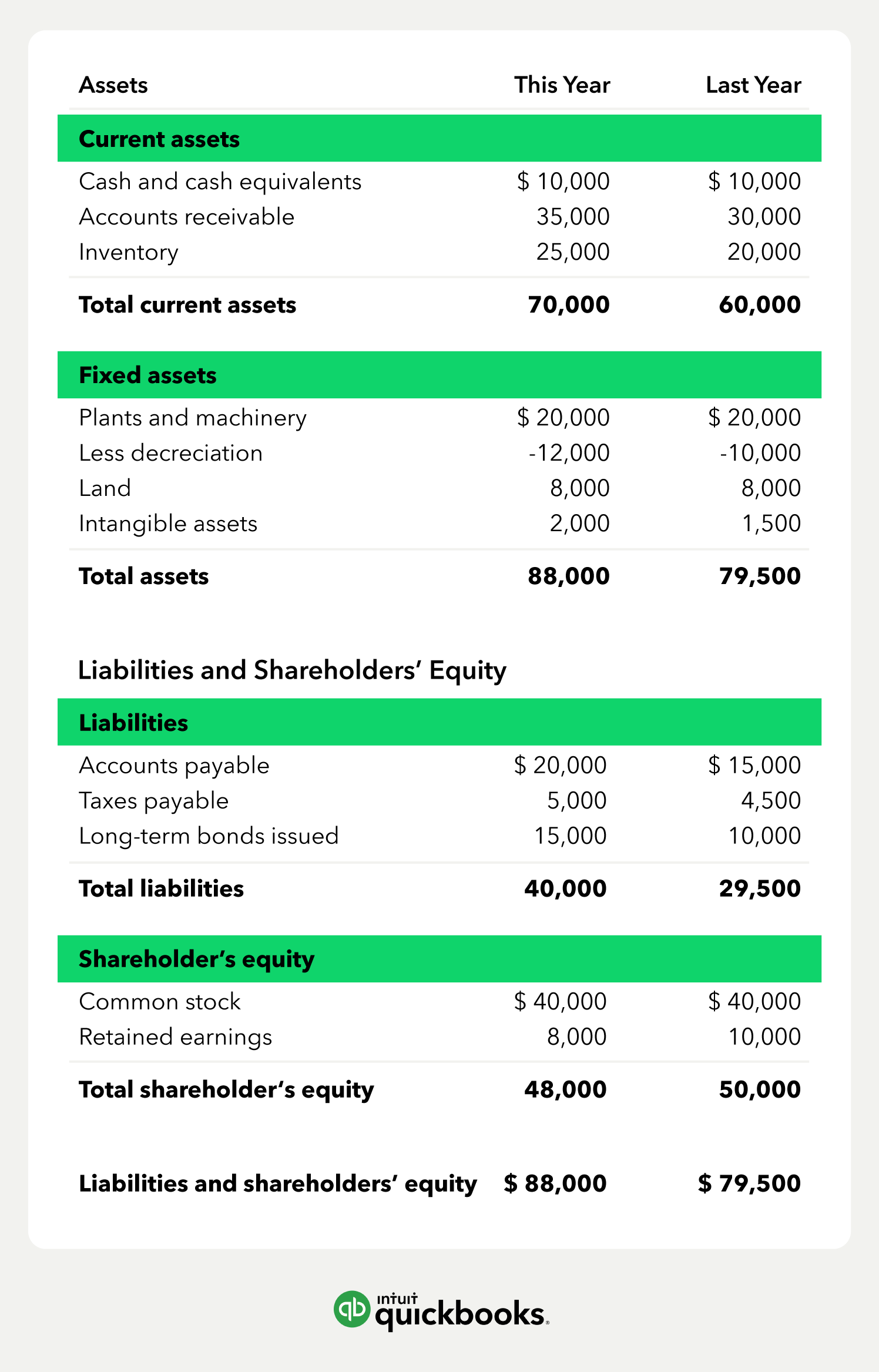
Assets
Liabilities may also include an obligation to provide goods or services in the future. Harvard Business School Online’s Business Insights Blog provides the career insights you need to achieve your goals and gain confidence in your business skills. For Where’s the Beef, let’s say you invested $2,500 to launch the business last year, and another $2,500 this year. You’ve also taken $9,000 out of the business to pay yourself and you’ve left some profit in the bank. Returning to our catering example, let’s say you haven’t yet paid the latest invoice from your tofu supplier. You also have a business loan, which isn’t due for another 18 months.
Non-current liabilities
You may have omitted or duplicated assets, liabilities, or equity, or miscalculated your totals. Here are five steps you can follow to create a basic balance sheet for your organization. According to the equation, a company pays for what it owns (assets) by borrowing money as a service (liabilities) or taking from the shareholders or investors (equity).
How to Read & Understand a Balance Sheet
Sandra’s areas of focus include advising real estate agents, brokers, and investors. She supports small businesses in growing to their first six figures and beyond. Alongside her accounting practice, Sandra is a Money and Life Coach for women in business. Accounting systems or depreciation methods may allow managers to adjust numbers on the balance sheet. Some executives may fiddle with balance sheets to make businesses look more profitable than they actually are.
- Here’s what you need to know to understand how balance sheets work and what makes them a business fundamental, as well as steps you can take to create a basic balance sheet for your organization.
- It shows what belongs to the business owners and the book value of their investments (like common stock, preferred stock, or bonds).
- In order to get a more accurate understanding of the company, business owners and investors should review other financial statements, such as the income statement and cash flow statement.
- Learning how to generate them and troubleshoot issues when they don’t balance is an invaluable financial accounting skill that can help you become an indispensable member of your organization.
- Assets represent things of value that a company owns and has in its possession, or something that will be received and can be measured objectively.
For instance, if Company D has 200,000 dollars in contributed capital and 300,000 dollars in retained earnings, the equity structure suggests a balance between capital contributions and earnings retention. A high level of retained earnings can indicate stability and the potential for reinvestment, but may also hint at conservative dividend policies. For growth-oriented investors, a balance favoring retained earnings might imply future expansion without external financing. You can learn a lot about a business’s health by looking at its balance sheet and calculating some ratios.
What are some examples of liabilities?
They’re important to include, but they can’t immediately be converted into liquid capital. In this way, the balance sheet shows how the resources controlled by the business (assets) are financed by debt (liabilities) or shareholder investments (equity). Investors and creditors generally look at the statement of financial position for insight as to how efficiently a company can use its resources and how effectively it can finance them. A balance sheet explains the financial position of a company at a specific point in time.
The balance sheet previews the total assets, liabilities, and shareholders’ equity of a company on a specific date, referred to as the reporting date. A balance sheet is a financial statement that shows the relationship the best accounting software for amazon fba sellers between assets, liabilities, and shareholders’ equity of a company at a specific point in time. One thing to note is that just like in the accounting equation, total assets equals total liabilities and equity.
That’s because a company has to pay for all the things it owns (assets) by either borrowing money (taking on liabilities) or taking it from investors (issuing shareholder equity). This quick ratio of 1.5 means that for every dollar of current liabilities, the company has $1.50 in quick assets, indicating a strong liquidity position without relying heavily on inventory. An unusually high accounts receivable balance relative to revenue may suggest poor collection practices or relaxed credit policies. If Company E has accounts receivable totaling 400,000 dollars against annual revenue of 1 million dollar, this 40% ratio could indicate slower collections, which may impact cash flow.